

Do We Deserve What's Coming?
As the effects of U.S. imperial violence in Iran begin to reach U.S. consumers, it may be worth asking if we've done enough.

During a livestream in August 2019, political commentator and streamer Hasan Piker stated in a now regularly dredged-up clip that the United States of America deserved the attacks that took place on September 11, 2001. The attacks, which killed nearly 3,000 people and left countless others suffering from long-term illnesses, were a devastating moment for many across the country. It shook the consciousness of many as a moment where a foreign organization many might not have even known of up to that point made the world’s preeminent imperialist power bleed from within the confines of its own borders.
Unsurprisingly, in the years since his statement, the clip has regularly resurfaced amid attacks levied against him by actors across the political spectrum. To many, a man saying that the deaths of thousands were ultimately something they were deserving of may have seemed a step too far. I have thought about that clip more and more over the years, particularly since the Israeli response to the Al Aqsa Flood operation of October 7, 2023, began. We have seen years now of genocide live-streamed for the world to see, and the response within the managers of the imperial core, even as popular support wanes, has been to crack down on dissent and largely just shift their rhetoric while maintaining their underlying support for the colony committing the atrocities.
Mothers have held their dying infants, fathers carried the remains of their children in plastic bags, medics have been uncovered in mass graves, and millions have called out endlessly begging the world for support amid famine and continued bombardment. All the while, our political leaders have condemned those resisting their own annihilation on the ground, policed the language of those protesting for the liberation of Palestinians, and begged us at every step to defang our demands so that their lives might be easier as they sign off on mass death.
With the initiation of the war on Iran by the U.S. and Israeli governments, the thought of that clip has only rang around in my head more. Millions across the region are waking up every morning fearing that it may be their last on this earth. Thousands have been killed, millions displaced, as the U.S. and Israeli militaries continue to try to exert their military and economic dominance in the region. As this happens, the response from many Americans has been largely muted. The war is unpopular, though a sizable number of Americans support the slaughter, and yet it seems that the status quo has largely been maintained. That is life within the imperial core after all, relative safety, even as genocide and acts of regional devastation are committed by our government.
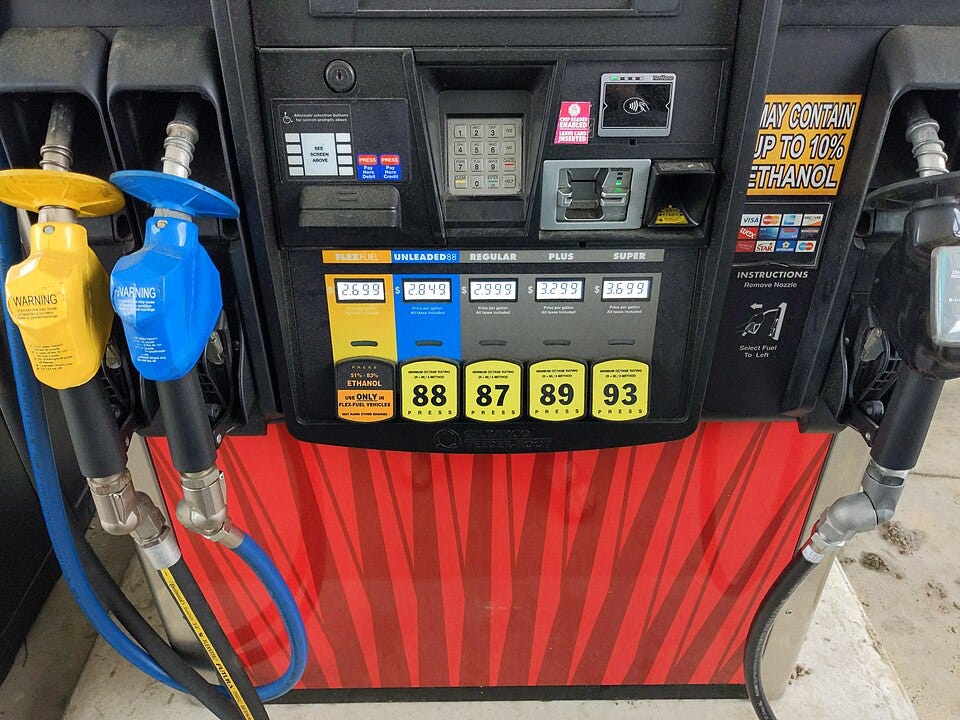
When we do hear real upheaval over the war, it generally comes in terms of the comparatively small costs we face as a result of it. Gas prices across the region have risen since the initiation of U.S. and Israeli aggression, for example. U.S. consumers are paying significantly more than they did a few months ago to fill their gas tanks, stretching already thin budgets thinner as many try to get by in an economy that seems to be increasingly clearly in an unspoken recession. We fear the possibility of higher food and energy costs, and, for some, changes to our travel plans during the summer.
Even I have fallen into this thought process as I sit in relative comfort compared to those I know in Lebanon, Palestine, Cuba, and Iran, all of whom have seen their lives severely disrupted by the ongoing horrors of U.S. imperialism. As my friends in Lebanon discuss seeing their villages demolished by Israeli occupational forces, I have been worried about whether or not I will be able to travel home for my sister’s wedding later this year. It’s a sort of dichotomy that is enough to make me feel crazy, and I assume I am not the only one.

As this all happens, and Americans begin to face the smallest pain of a war that has devastated the lives of millions, the response has remained relatively muted. No mass protest movement has erupted akin to the war in Iraq or in the months following the Al Aqsa Flood. It seems many who have been in the space are facing increased burnout and are being stretched thinner and thinner as we try to devise plans that get people to care. Worse yet, as organizers continue to raise awareness and devise campaigns, they are oftentimes met with apathy or outright hostility.
I heard one story of a candidate in Philadelphia going to a mosque and telling the congregation after Jummah prayer that they should vote for him because his opponent was “Only focused on foreign issues”, as opposed to his focus on their lives. Mind you, he was talking about his opponent speaking out about the genocide in Palestine. He was met by the shout of “Takbir!” from some in the congregation, a celebration of his willingness to sacrifice millions for our domestic comforts. It would seem apathy and nativism are the trends of the day.
As I hear all of this and see many simply go about their day or attempt to avoid the news of the day amid the mass devastation our nation reaps, I cannot help but arrive at a simple question: Do we, perhaps, deserve what is to come?
It would seem that for many, these issues only become priorities when the consequences reach our shores, whether in the form of a national tragedy or a slightly higher price at the pump. For our government, even this is tolerable, as they do not even care about the economic harm done to millions within the imperial core if it means maintaining U.S. hegemony in the global order. Apathy has become easier because we are insulated from the overwhelming amount of violence that is inflicted to maintain our relative material comfort.
Obviously, this comfort is not shared equally amongst all those within the imperial core, as many within the confines of the U.S. still suffer under genocidal policymaking and systemic violence. Still, it has by and large become easier to ignore injustice and simply say we stand against it than plug in and identify ways to stop it. Perhaps this is a failure of socialist organizations, as much as of any individual, as many seem to know of no alternative or way forward that could lead to change. This reality is something I find myself thinking about almost daily.
As Hasan Piker has explained ad nauseam at this point, his commentary around the September 11th attacks was not him stating that those victims deserved such suffering. Rather, he was stating that the attacks were the result of decades of U.S. imperial meddling, a sort of boomerang resulting from the blood on the hands of our government. Applying this thought to the current crises we are witnessing across the world, I cannot help but agree completely with this analysis. Perhaps we deserve to have higher gas prices, to pay more for our food, and to feel bad about the horrors we are otherwise so far removed from. This is even more true of those who choose to do nothing amid the horrors, or worse yet, who choose to toss it to the side entirely deliberately for the sake of their own interests.
When accounting for the historic and current horrors unleashed by our government, perhaps we deserve worse than just the fear of not being able to fill up our gas tanks. For those who have struggled under the boot of U.S. imperialism, I imagine such a reality would be welcome when compared to what they’ve experienced for years upon years. Millions do not have the luxury of remaining apathetic as they struggle for their very survival. Millions more will continue to die if we do not break from the apathy and hopelessness that have enveloped so many of us.
A very compelling piece. A strength of this piece is that it's effective in that it does not treat apathy as simply an individual moral failure, but as something structurally produced by life inside the imperial core, where immense violence abroad can coexist with relative normality at home. The reflections on political exhaustion, insulation, and selective outrage were especially strong, particularly the point that suffering only seems to become “real” to many once it begins disrupting everyday life domestically. Well-written.
As individuals, no, as a group, hell yes.